
Ingredient of the week: Lime
A personal story from Piura about Peruvian limes, limón sutil, the Chira Valley and why the right lime matters so much for ceviche and leche de tigre.
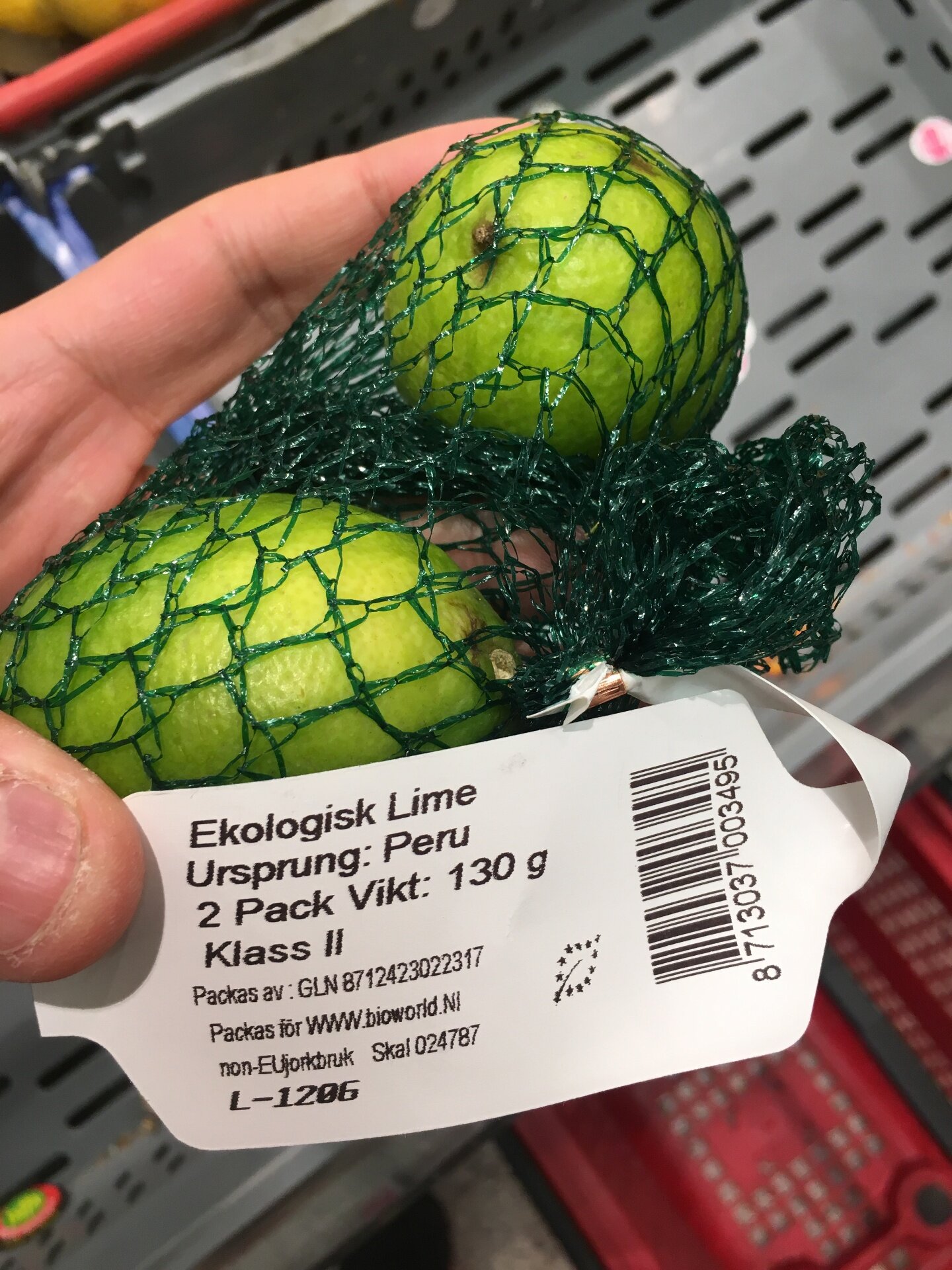
If you happen to find a Peruvian lime, grab it. Don't hesitate.
Peruvian limes, or limón sutil, are small, extraordinarily aromatic and have a very thin skin. The juice is intensely fragrant: citrusy, floral, sharp, fruity, acidic and almost oily in the way the skin releases its perfume. There is nothing quite like it.
I was lucky to spend many summers with my grandparents in Piura, in the north of Peru. Piura has a very particular kind of abundance. The heat, the dry landscape, the river, the orchards, the smell of ripe fruit in the air: everything feels generous and intense. There were mangoes, tamarind, plums, papayas, chillies and fruits that tasted as if they had absorbed the sun.
But for me, one ingredient always stood above the rest: the limes.
Those who know, know. The limes from El Chira are special.
In Chilaco, our family farm on the riverside of the Chira, the limes were part of everyday life. You could smell them before tasting them. Their skin was thin and full of oils, and when you cut one open, the perfume stayed on your fingers. I remember eating them simply, with a little salt on top, feeling that mix of sharpness, fruit and freshness all at once. Other times they became lemonade: cold, bright, almost electric in the Piura heat.
At the time, it was just something normal. The kind of flavor you grow up with and assume exists everywhere. Later, I understood how rare it was.
For ceviche, these limes are the best. They have high acidity, but without the bitterness that can easily take over. They act quickly on the fish and help develop the leche de tigre right away, bringing brightness, freshness and aroma without becoming harsh.
In Stockholm, we work with what arrives. Most weeks that means good Mexican limes, which are excellent and usually the closest alternative. But once, I managed to find limes in Sweden that reminded me of the ones from Piura. I got so happy that I went out into the dining room at CHECA so guests could smell them and taste them. People noticed the difference immediately: the perfume, the acidity, the freshness, the balance.
That moment said a lot about Peruvian food. Sometimes the difference is not only in the recipe. It is in the ingredient. In the lime. In the chilli. In the fish. In the memory of how something is supposed to taste.
Brazilian limes are often easier to find, but for me they tend to be less bright and too bitter for ceviche. So if you cook at home and want to get closer to the Peruvian profile, look for smaller limes with a thin skin and squeeze them at the very last moment.
And never zest them into the leche de tigre. The oils are too aggressive. Just the juice, at the end.
At CHECA, this is part of the constant search: recreating genuine Peruvian flavors in Stockholm while respecting the ingredients that make those flavors possible. Sometimes it is technique. Sometimes it is memory. And sometimes, it is simply finding the right lime.